
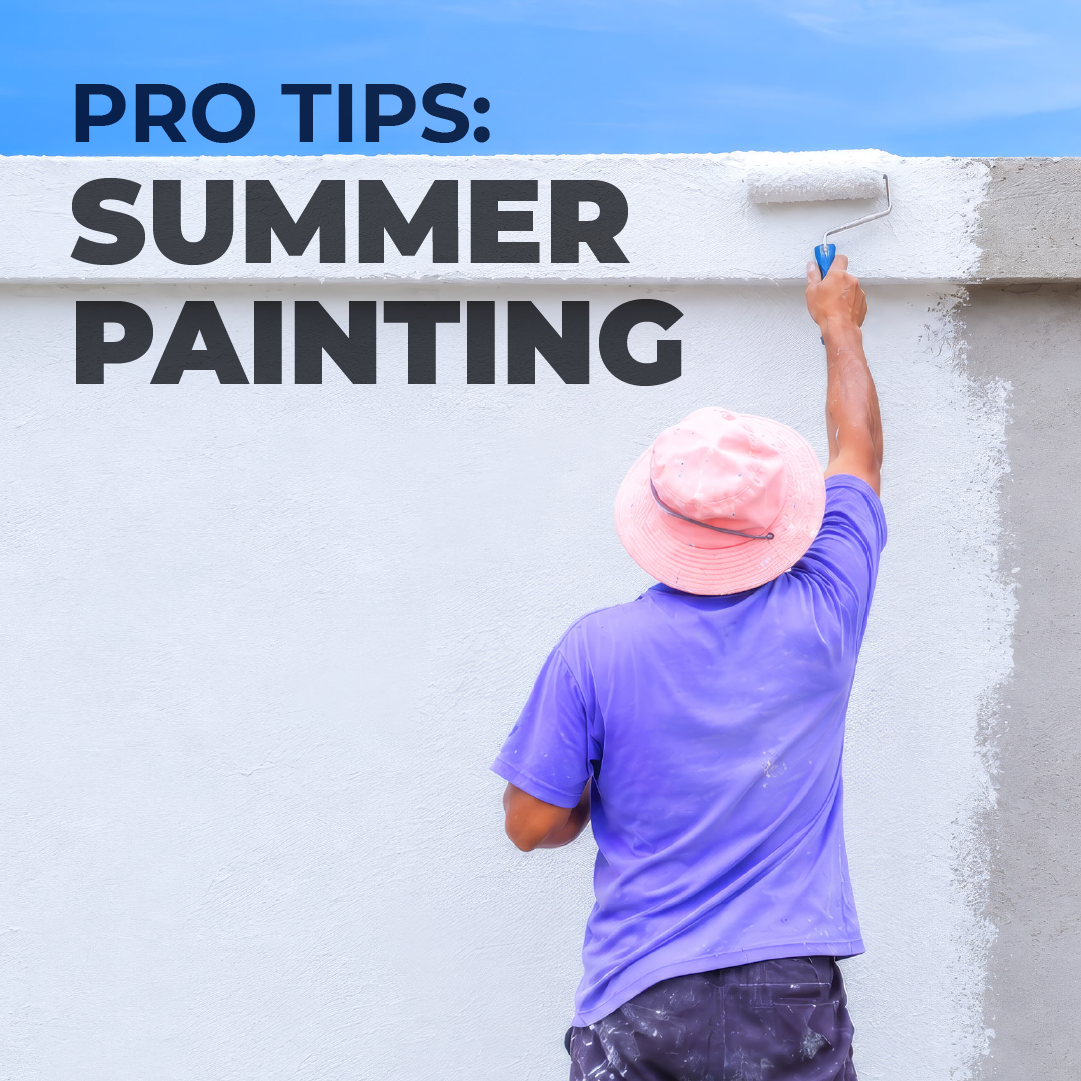
Longer summer days and faster drying can make exterior painting easier, but intense heat, direct sun and sudden thunderstorms can affect the finish. Understanding these conditions helps you achieve a smooth, durable finish.
Summer Painting Tip 1: Understanding Ideal, Minimum & Maximum Temperatures
Temperature affects how paint dries, adheres and cures; excessive heat can be as damaging as cold.
Many Universal Paints products apply best at about 23°C and below 50% relative humidity. Check both air and surface temperatures.
- Ideal temperature: Approximately 23°C for optimal application conditions.
- Minimum temperature: Air temperatures should generally be at least 10°C, subject to the product’s application requirements.
- Maximum temperature: This varies according to the product, but excessively hot surfaces should be avoided, particularly when exposed to direct sunlight.
- Humidity: Relative humidity below 50% is preferable for optimal drying and curing conditions.
Sunlit walls can be much hotter than the air and may be unsuitable for painting.
Always refer to the product’s Technical Data Sheet (TDS) for specific application conditions and temperature limitations.
Summer Painting Tip 2: Choose the Right Time of Day
More daylight does not mean you should paint all day. Direct midday sun can dry paint too quickly for a smooth, even finish. For the best results:
- Early morning: A good time to begin once any overnight dew has evaporated and surfaces are completely dry.
- Mid-morning: Often provides favourable conditions before temperatures become too high.
- Midday to early afternoon: Avoid painting walls exposed to intense direct sunlight, especially during extreme heat.
- Late afternoon: Can provide cooler conditions, provided there is sufficient time for the paint to dry before evening moisture or rain develops.
A useful approach is to follow the shade around your home, starting with walls that are not exposed to direct sunlight and moving as the sun changes position throughout the day.
Summer Painting Tip 3: Avoid Painting in Direct Sunlight
Too much direct sun can damage the final finish. On hot surfaces, water or solvents evaporate too quickly for paint to spread and level properly. These include:
- Lap marks: Visible lines or overlapping sections caused by paint drying before adjoining areas can be blended.
- Brush and roller marks: Paint may not have enough time to level properly, leaving an uneven texture.
- Poor adhesion: Excessively rapid drying can interfere with proper film formation, potentially affecting long-term durability.
- Uneven coverage: Paint can become difficult to spread consistently, resulting in noticeable differences in the finish.
Avoid applying paint to walls that feel excessively hot. Instead, allow the surface to cool or move to a shaded area. When painting large exterior walls, work systematically from one natural stopping point to another, maintaining a wet edge to help prevent visible lap marks.
Summer Painting Tip 4: Keep an Eye on Summer Rain and Humidity
South African summer weather can change quickly from sunshine to afternoon thunderstorms. Rain can damage paint before it dries, causing streaks, water marks or an uneven finish. High humidity also slows drying and curing. Before beginning an exterior painting project:
- Check the weather forecast and plan your painting around a stable period of dry weather.
- Avoid painting when rain or thunderstorms are expected before the coating has had sufficient time to dry.
- Allow walls to dry completely after rainfall or pressure washing.
- Avoid applying paint when humidity levels are excessively high.
- Follow the recommended drying and recoating times specified on the product’s Technical Data Sheet.
Remember: Just because paint feels dry to the touch doesn’t mean it has fully cured. Freshly painted surfaces still need time to develop their intended durability and weather resistance.
Summer Painting Tip 5: Don’t Rush Between Coats
Summer heat may dry the surface quickly, but do not recoat sooner than recommended. Drying and curing are different: paint may feel dry while still developing strength and adhesion. Applying another coat too soon can trap moisture or solvents beneath the surface, potentially causing problems such as blistering, soft coatings or poor adhesion.
Always follow the manufacturer’s recommended recoating intervals, even when conditions appear ideal. It’s also important to remember that excessively hot weather doesn’t necessarily mean better drying conditions. Rapid surface drying can affect the coating’s overall performance, particularly if the paint has not had sufficient time to form a uniform film.
Summer Painting Tip 6: Prepare Your Exterior Surfaces Properly
Summer is an excellent opportunity to tackle exterior maintenance, but warmer weather doesn’t eliminate the need for thorough surface preparation. Over time, exterior walls accumulate dirt, dust, algae and other contaminants that can prevent new paint from adhering properly. Before painting, inspect your exterior for any signs of damage or deterioration. Key preparation steps include:
- Clean the surface: Remove accumulated dirt, dust, grease, algae and other contaminants.
- Remove loose paint: Scrape away peeling or flaking coatings and sand uneven edges to create a sound surface.
- Repair imperfections: Fill cracks and repair damaged plaster using suitable exterior repair products.
- Address moisture problems: Identify and repair any leaks or damp-related issues before applying new paint.
- Prime where necessary: Apply the appropriate primer or sealer to bare, repaired or previously untreated surfaces.
- Allow surfaces to dry: Ensure walls are completely dry before applying primers or topcoats.
Taking the time to prepare correctly helps improve adhesion, coverage and the long-term performance of your exterior paint.
Summer Painting Tip 7: Protect Your Paint and Equipment From the Heat
Summer heat doesn’t only affect the paint once it’s on the wall. It can also affect paint stored in open containers or trays during application. Leaving paint exposed to direct sunlight can cause it to thicken or begin forming a skin, making application more difficult and potentially affecting the final finish. To keep your paint in good condition:
- Store paint containers in a cool, shaded area away from direct sunlight.
- Keep lids closed when the paint is not being used.
- Avoid leaving loaded paint trays exposed to excessive heat for extended periods.
- Work with manageable quantities of paint rather than leaving large amounts exposed.
- Never add extra water or solvents to compensate for thickening unless permitted by the product’s Technical Data Sheet.
Keeping your paint and equipment protected throughout the day helps maintain consistent application and reduces unnecessary product wastage.
A Little Planning Goes a Long Way
Summer offers a great opportunity to refresh and protect your home’s exterior, but the key to a successful paint job is knowing how to work with the weather rather than against it.
By choosing the right time of day, avoiding extreme surface temperatures, preparing your walls properly and allowing sufficient drying time, you can achieve a beautiful, durable finish that stands up to South Africa’s changing weather conditions.
Visit your nearest Universal Paints Direct Outlet for expert advice and product selection to help make your next summer painting project a success.