
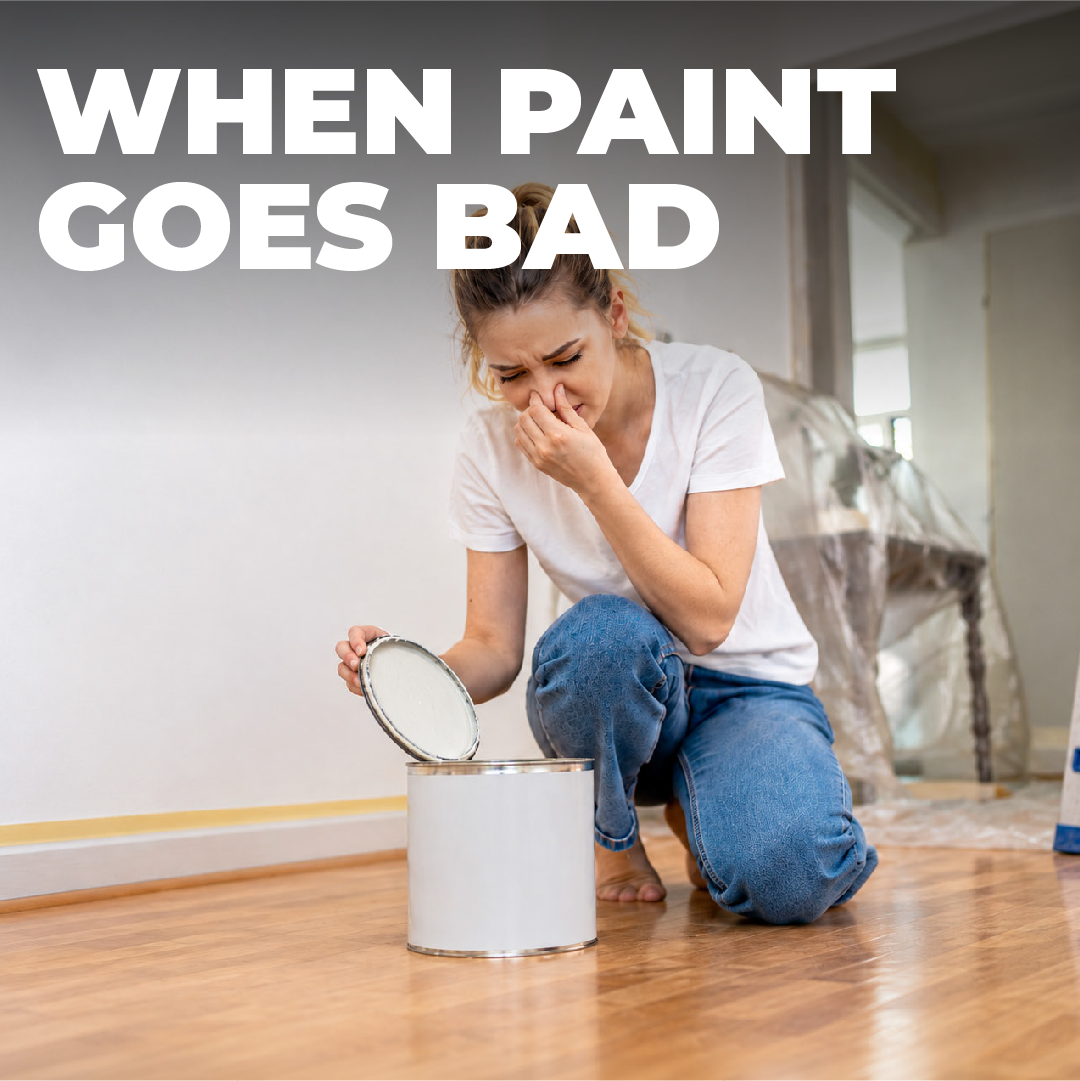
Why does old paint smell bad? If you’ve ever opened a tin of leftover paint and noticed a sour or rotten smell, you’re not alone. While it can be surprising, an unpleasant odour doesn’t necessarily mean the paint was faulty when purchased. In many cases, the smell develops after opening due to contamination, incorrect handling or unsuitable storage conditions.
Understanding what causes paint to spoil and how to prevent it can help you protect leftover paint, reduce waste and achieve better results on future touch-ups.
Why Does Old Paint Smell Bad?
The most common cause of unpleasant odours in stored water-based paint is bacterial or microbial contamination. Although these paints contain preservatives, contaminants introduced during use can reduce their effectiveness. As microorganisms multiply, they may break down components in the paint, creating foul odours and changing its consistency. Common signs of spoilage include:
- Unpleasant odour: A strong sour, rotten or unusual smell.
- Changed consistency: Paint that is excessively thick, lumpy, stringy or watery.
- Visible mould or discolouration: Growth or colour changes on the surface.
- Irreversible separation: Components that will not blend back into a smooth, uniform product.
Some separation during storage can be normal. Persistent lumps, unusual textures or foul odours, however, usually indicate deterioration.
How Does Paint Become Contaminated?
Understanding why old paint smells bad starts with recognising how contaminants enter the tin. Even small amounts of dirt, moisture or bacteria can affect paint quality, particularly when it’s stored for extended periods.
Using Dirty or Damp Painting Tools – Brushes, rollers and stirrers can transfer dirt, dust, bacteria or residual water into the original tin. Even small amounts may affect paint stored for a long period. Prevention: Use only clean, completely dry tools when working from the tin. Never return used or recently rinsed tools to the original paint supply.
Pouring Used Paint Back into the Tin – Paint left in a tray can collect dust, dirt, moisture and other impurities. Pouring it back into the original tin may contaminate the entire remaining supply. Prevention: Decant only what you need into a clean, dry tray or container. Keep any unused tray paint separate in a clean, airtight container where appropriate.
Adding Water Directly to the Paint Tin – Some water-based paints may be thinned with water when the manufacturer allows it. Adding water directly to the original tin, however, can introduce microorganisms, disturb the formulation and reduce hiding power or application quality. Prevention: Decant the required amount into a clean, dry container and follow the recommended thinning method and proportions. Do not add water to the original tin simply to make stored paint easier to stir.
How Incorrect Storage Can Cause Old Paint to Smell Bad
Correct handling is only part of the picture. Storage conditions also determine how long leftover paint remains usable.
- Excessive heat: Can accelerate deterioration and encourage microbial activity in contaminated water-based paint.
- Extreme cold: Can cause some water-based paints to separate or suffer permanent damage, especially if they freeze.
- Poorly sealed tins: Allow air, moisture and contaminants to enter, while increasing the risk of drying or surface skinning.
Best practice: Wipe the rim clean, close the lid securely and store the tin upright in a cool, dry, sheltered place away from direct sunlight, freezing conditions and major temperature changes.
Can You Still Use Paint That Smells Bad?
If paint has developed a strong, unpleasant odour, it is generally best not to use it. Spoiled paint may no longer adhere, cover or dry as intended, and it may leave an unwanted smell in the finished space. Before using leftover paint, check:
- Smell: Is the odour unusually sour or rotten?
- Appearance: Is there mould, unexpected discolouration or excessive lumping?
- Consistency: Does the paint return to a smooth, uniform consistency when stirred, where stirring is permitted?
- Storage history: Was the tin sealed properly and stored under suitable conditions?
Remember that paint formulations naturally smell different. Solvent-based paints, for example, have a characteristic solvent odour that should not automatically be mistaken for spoilage.
If you suspect deterioration, do not apply the paint until you have obtained advice from your nearest Universal Paints Direct Outlet. Dispose of confirmed spoiled paint responsibly and in accordance with local waste requirements.
How to Keep Leftover Paint in Good Condition
These simple precautions can help keep leftover paint in the best possible condition:
- Use clean, dry tools: Prevent dirt, bacteria and moisture from entering the paint tin.
- Decant paint before use: Work from a separate container rather than repeatedly dipping used tools into the original tin.
- Avoid returning unused paint: Keep leftover paint from trays separate to prevent cross-contamination.
- Follow thinning instructions: Only thin paint when recommended and always use the correct method and proportions.
- Seal tins properly: Ensure lids are tightly closed to prevent contamination and drying.
- Store paint correctly: Choose a cool, dry location away from excessive heat, direct sunlight and freezing conditions.
- Follow product guidelines: Always refer to the manufacturer’s instructions for mixing, application and storage.
Good handling and storage protect paint quality, reduce unnecessary waste and improve the chances that the remaining product will be suitable for future touch-ups.
Protect Your Paint and Get the Most Out of Every Tin
A foul smell does not necessarily mean paint was defective when purchased. Spoilage often develops after opening because of contamination, moisture, incorrect handling or poor storage. Use clean, dry tools, avoid returning used paint to the tin, follow thinning instructions and store leftovers securely. If the smell or consistency changes despite correct handling, seek professional advice before use.
For expert advice, product recommendations and guidance on your next project, visit your nearest Universal Paints Direct Outlet.