
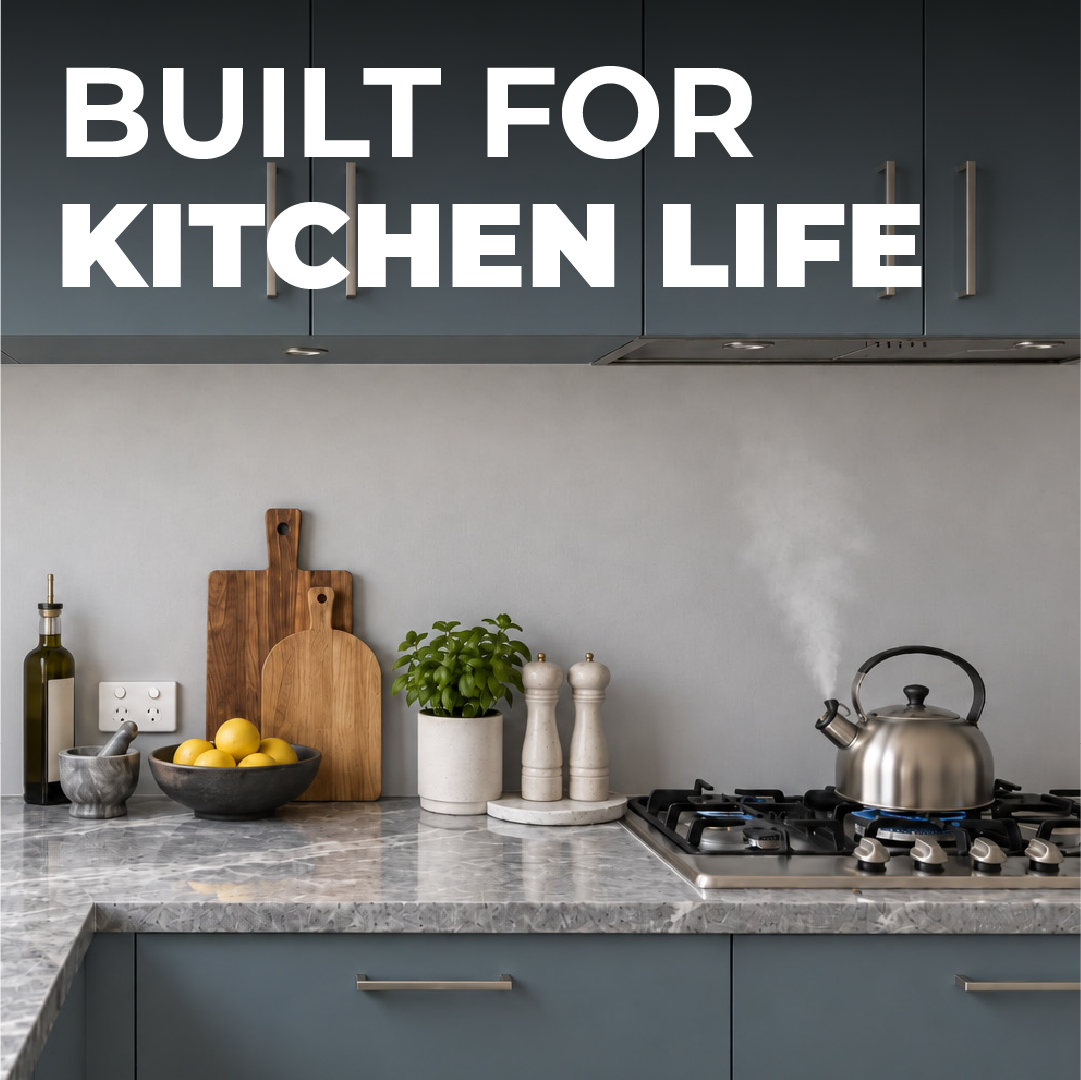
The kitchen is one of the busiest rooms in the home, and its walls face constant exposure to cooking fumes, grease, food splashes, steam and humidity. The right paint system protects these surfaces while keeping them attractive, practical and easy to maintain.
When choosing kitchen paint, focus on three essentials: washability, stain resistance and durability. A quality coating should tolerate regular cleaning, resist grease and food marks, and cope with occasional moisture without losing its finish. With suitable preparation and the correct products, your kitchen can look freshly painted for years.
How Cooking Fumes Affect Painted Walls
Frying, boiling and baking release grease particles, steam and airborne residue. Without adequate protection and ventilation, these contaminants can gradually damage painted surfaces and cause the following problems:
- Grease and oil build-up: Airborne particles settle on walls and ceilings, forming a sticky film that attracts dust and becomes increasingly difficult to remove.
- Discolouration: Cooking fumes, smoke and grease can dull or stain painted surfaces, particularly lighter colours near stovetops, splashbacks and ceilings.
- Lingering odours: Porous or poorly maintained surfaces may retain cooking smells, especially where ventilation is limited.
- Poor paint adhesion: Grease, oil and moisture can prevent new paint from bonding properly, leading to peeling, flaking or an uneven finish if the surface is not thoroughly prepared.
What Makes a Good Kitchen Paint?
Standard interior paints may not withstand the demands of a busy kitchen. Look for a coating that provides the following benefits:
- Washability: The finish should withstand frequent wiping without becoming patchy, dull or damaged.
- Stain resistance: It should resist grease, food splashes and everyday marks so that surfaces remain cleaner for longer.
- Moisture and humidity resistance: The coating should cope with occasional steam and condensation while retaining a clean, attractive finish.
- Long-term durability: A hard-wearing finish reduces maintenance and the need for frequent touch-ups in this high-traffic space.
Priming for Success: Choosing the Right Kitchen Primer
Good results begin with proper preparation. A suitable primer seals porous surfaces, improves adhesion and creates a consistent base for a smooth, durable topcoat.
For new or previously unpainted walls: Water Based Plaster Primer is well suited to most kitchens. Its minimal VOC content helps limit strong indoor fumes, while its approximate 4–6 hour drying time supports faster project completion. It also provides effective sealing and adhesion.
For heavily stained or discoloured walls: Pigmented Plaster Primer can provide additional coverage and a more uniform base, provided the surface is clean and any moisture problems have first been resolved. Because it is solvent based, allow for a longer drying time and ensures good ventilation during application.
Both primers are suitable for cement plaster, concrete, gypsum plaster and fibre cement. Choose according to the wall condition, the preparation required and your preferred application process. Previously painted or glossy surfaces may require a different preparation and priming system.
Our Top Kitchen Paint Recommendations
Once the surface has been prepared correctly, select a topcoat that matches the area and desired finish. Universal Paints offers several durable, washable options for kitchen walls, cupboards, doors and trims.
For a Low VOC Water-Based Solution
Water-based paints are a practical choice for kitchens, offering durable, washable finishes with minimal VOC content. They are particularly suitable for indoor spaces where reduced paint fumes and easier maintenance are priorities.
UniGlo Water-Based Enamel
Best for: cupboards, doors, trims and other frequently handled surfaces. UniGlo is a premium water-based enamel with a smooth, durable mid-sheen finish. Its fully washable, stain and scratch resistant surface makes grease marks, food splashes and spills easier to remove. The UV-resistant formulation helps retain colour without the yellowing associated with many traditional solvent-based enamels, while minimal VOC content reduces paint fumes indoors.
UniShield Antimicrobial Paint
Best for: Kitchen walls, cupboards, doors and other surfaces where hygiene and easy cleaning are essential. UniShield is a premium water-based enamel with a smooth, silky sheen finish and added antibacterial and antifungal protection, making it particularly suitable for kitchens and other hygiene-sensitive areas. Its fully washable, stain and scratch resistant formulation makes grease marks, food splashes and everyday spills easier to clean, while helping protect the painted surface against microbial growth. The UV-resistant, non-yellowing formulation and minimal VOC content make it a practical, long-lasting choice for busy kitchens.
If You Prefer a Traditional Enamel Finish
Traditional solvent-based enamels remain a popular choice for kitchen cupboards, doors and trims thanks to their durable, hard-wearing finishes. Universal Paints offers several enamel options, from a high-gloss finish to softer eggshell and satin sheens, allowing you to choose the look and level of shine that best suits your kitchen.
High Gloss Enamel
Best for: Kitchen cupboards, doors and trims where a hard-wearing, high-shine finish is preferred. High Gloss Enamel is a traditional long oil alkyd-based coating that provides a smooth, glossy surface with excellent durability. Its fully washable, scratch and mar resistant finish makes it a practical choice for surfaces exposed to frequent handling, food splashes and everyday wear. With excellent adhesion and application properties, it offers a durable, polished finish that is easy to maintain in busy kitchens.
Eggshell Enamel
Best for: Kitchen cupboards, doors, trims and other surfaces where a softer, more understated finish is preferred. Eggshell Enamel is a medium oil alkyd-based coating that provides an elegant, semi-matt silky finish without the pronounced shine of traditional high gloss. Its fully washable, scratch and mar resistant formulation makes it a practical choice for frequently handled kitchen surfaces, while excellent adhesion helps ensure a durable, attractive result. It is ideal for creating a refined, contemporary kitchen finish without compromising on everyday practicality.
Velvathane Non-Drip Enamel
Best for: Kitchen cupboards, doors and trims where a smooth, durable finish is essential. Velvathane Non-Drip Enamel is a modified alkyd/urethane-based coating that provides an elegant satin sheen finish. Its specialised non-drip formulation helps minimise runs and drips during application, making it particularly suitable for detailed surfaces such as cupboard doors and frames. The fully washable, scratch and mar resistant coating provides lasting protection against everyday handling and wear, making it a practical option for frequently used kitchen surfaces.
Traditional solvent-based enamels have a higher VOC content than water-based alternatives, so ensure adequate ventilation during application and drying. Always follow the manufacturer’s recommended preparation, application and drying instructions for the chosen product.
Converting Existing Enamel to Water-Based Kitchen Paint
If your kitchen walls, doors, trims or cupboards are currently painted with a traditional solvent-based enamel, you can successfully switch to a modern water-based enamel such as UniGlo. The key to a successful conversion is proper surface preparation to ensure excellent adhesion and long-lasting results.
Universal Undercoat is designed to bridge the gap between existing enamel coatings and new water-based topcoats, helping create a suitable foundation for the new finish.
Preparation and application steps
- Lightly sand the glossy enamel surface with fine sandpaper to create a matt finish that promotes adhesion.
- Remove all dust and sanding residue from the surface.
- Clean thoroughly with a Sugar Soap solution to remove cooking grease, oil deposits, food residue and other kitchen contaminants.
- Rinse thoroughly with clean water to remove any remaining cleaning solution.
- Allow the surface to dry completely before applying any paint.
- Apply one coat of Universal Undercoat to promote adhesion between the existing enamel and the new coating. Allow 16–24 hours to dry.
- Finish with two coats of UniGlo Water-Based Enamel, following the recommended drying times between coats.
Quick identification tip: Rub a small, inconspicuous area with a cloth dampened with methylated spirits. Paint that softens or transfers to the cloth is likely water based; paint that remains unaffected may be solvent-based enamel. Treat this only as an indicative test and seek professional advice if you are unsure.
Give Your Kitchen Walls Lasting Protection
A durable kitchen finish depends on both the paint you choose and the preparation beneath it. The right system will resist stains, tolerate regular cleaning and help walls, cupboards and trims retain their fresh appearance for years.
Whether you are renovating the entire kitchen or refreshing selected surfaces, visit a Universal Paints Direct Outlet near you. The team can recommend a suitable system for protecting your kitchen against grease, moisture, stains and everyday wear.